What Water Leaves Behind
Far north in the Ilocos region, the municipality of Pasuquin preserves a traditional method of salt-making.
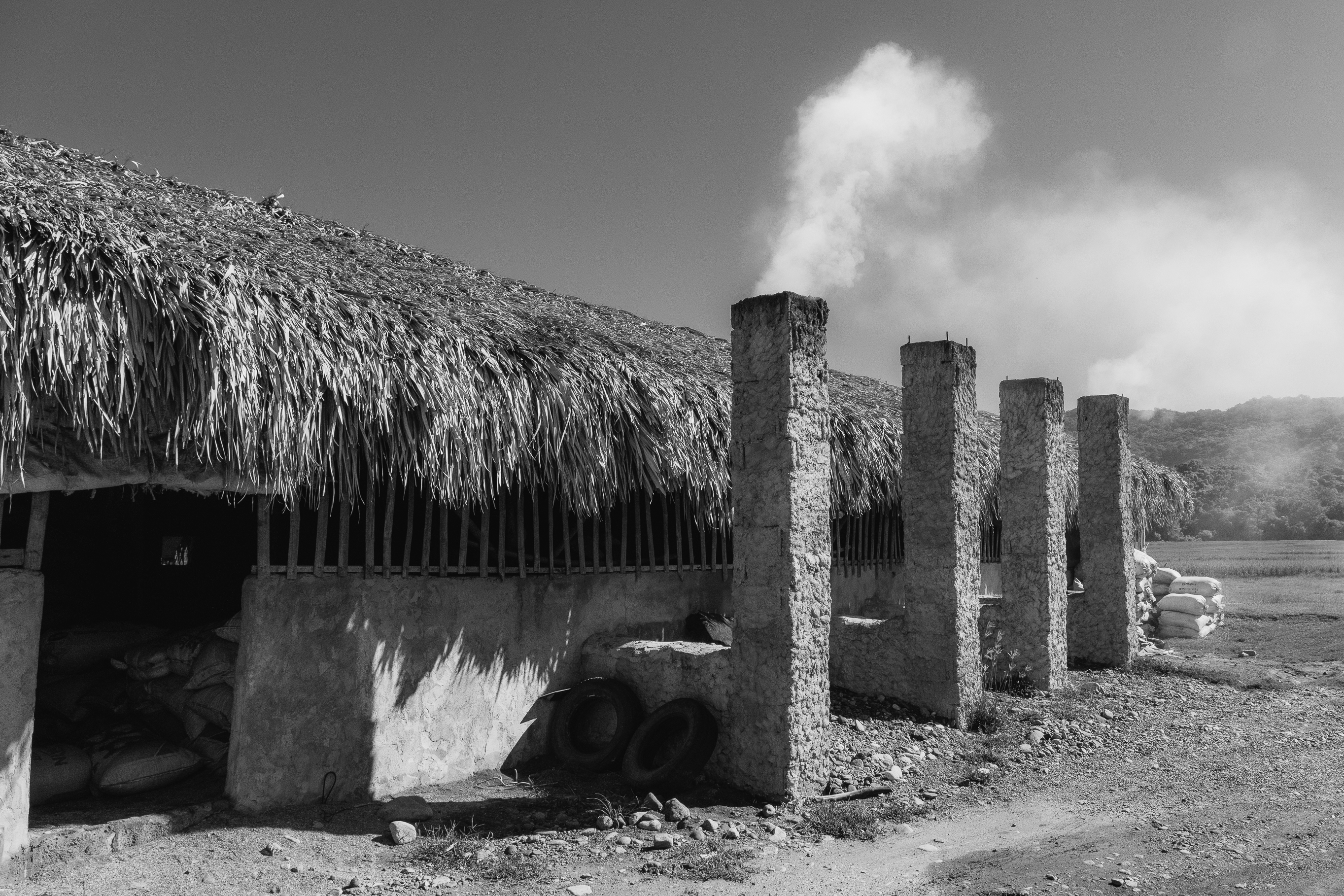
Smoke came out of chimneys sticking out from the sides of a shed. The sight made me take a second look, but the realization that I was finally about to witness the salt-making process immediately filled me with excitement.
The heat hit me as I entered the workplace, but after a few minutes, I found myself surprisingly comfortable in the warmth, much like wearing a jacket on a cold night.
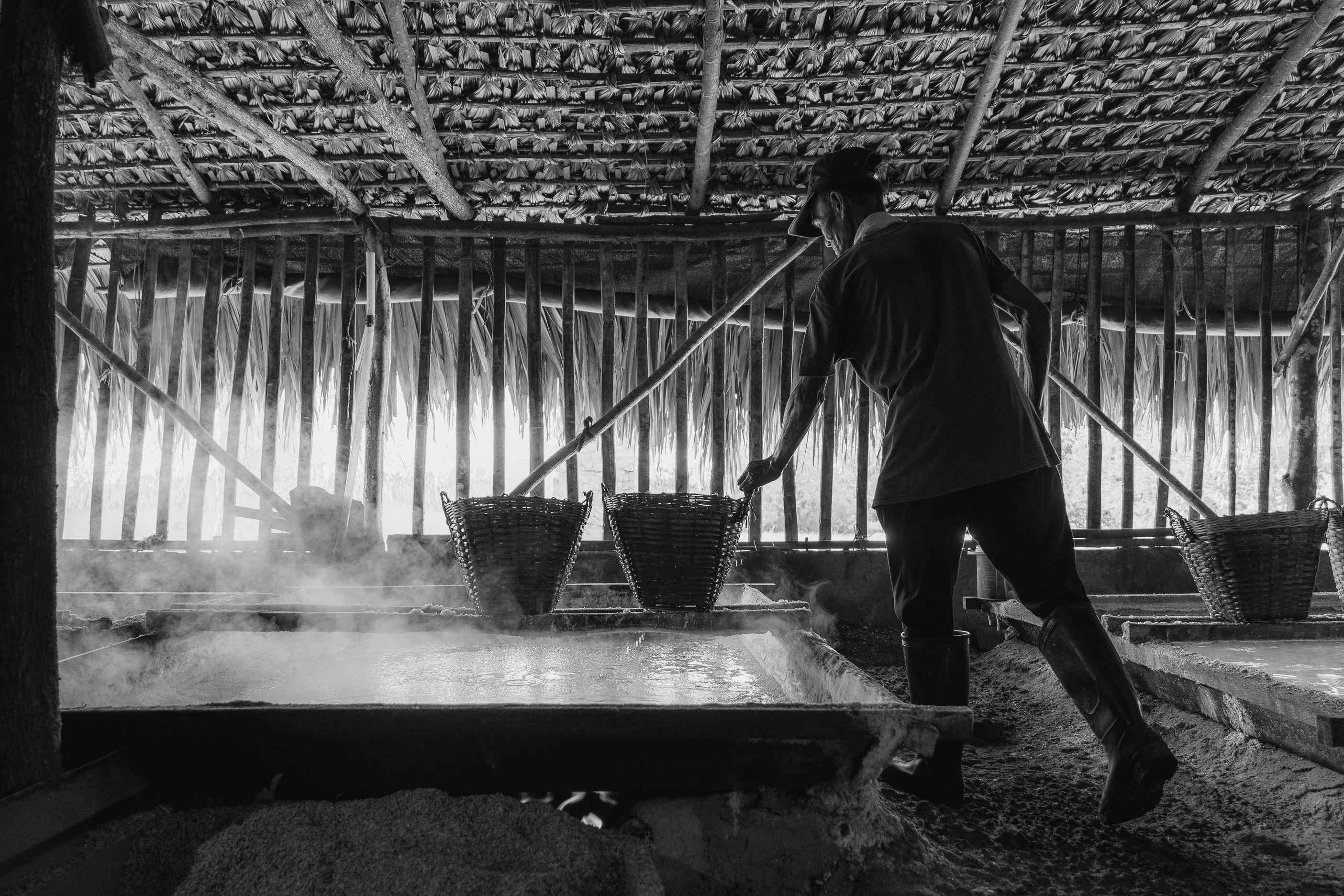
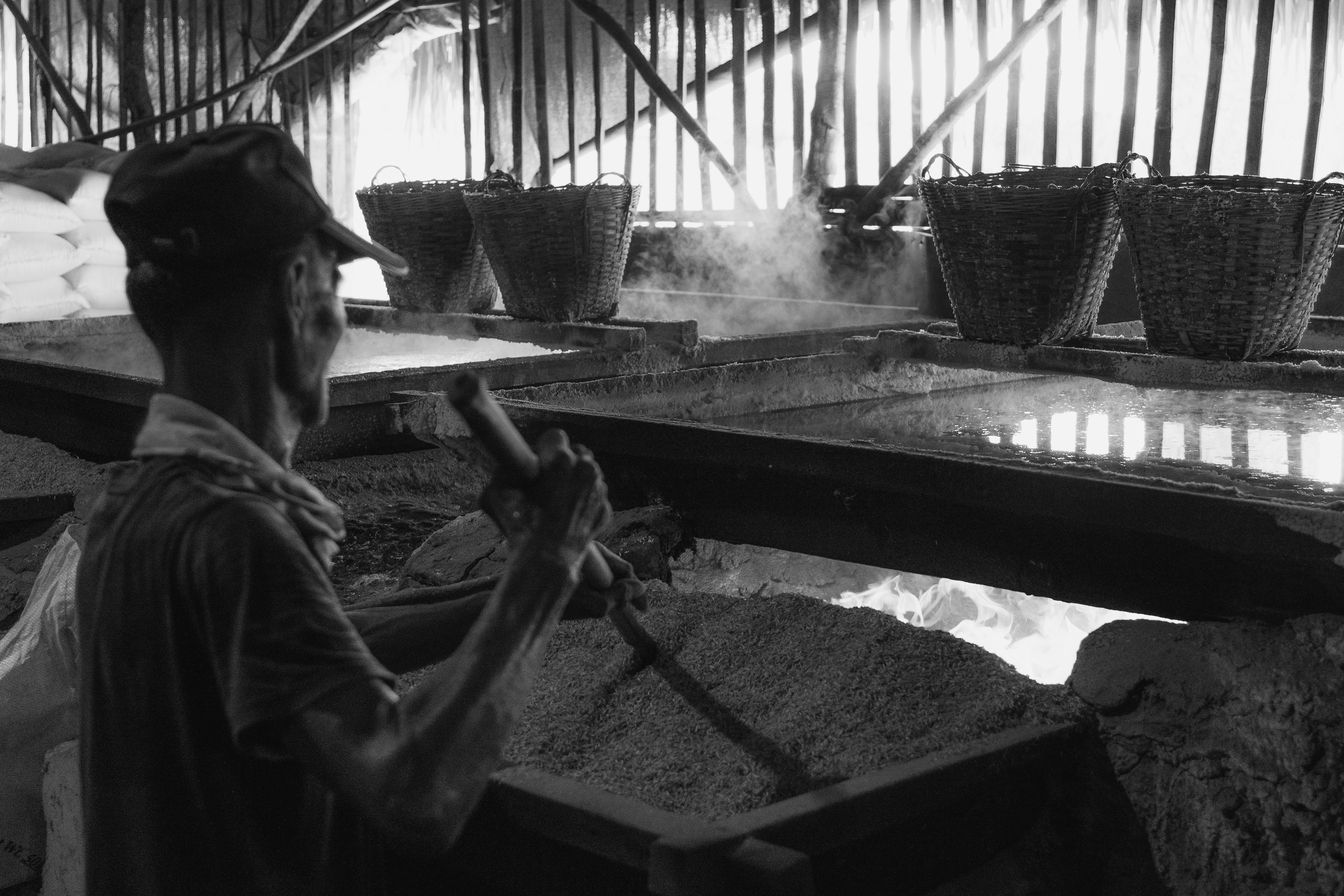
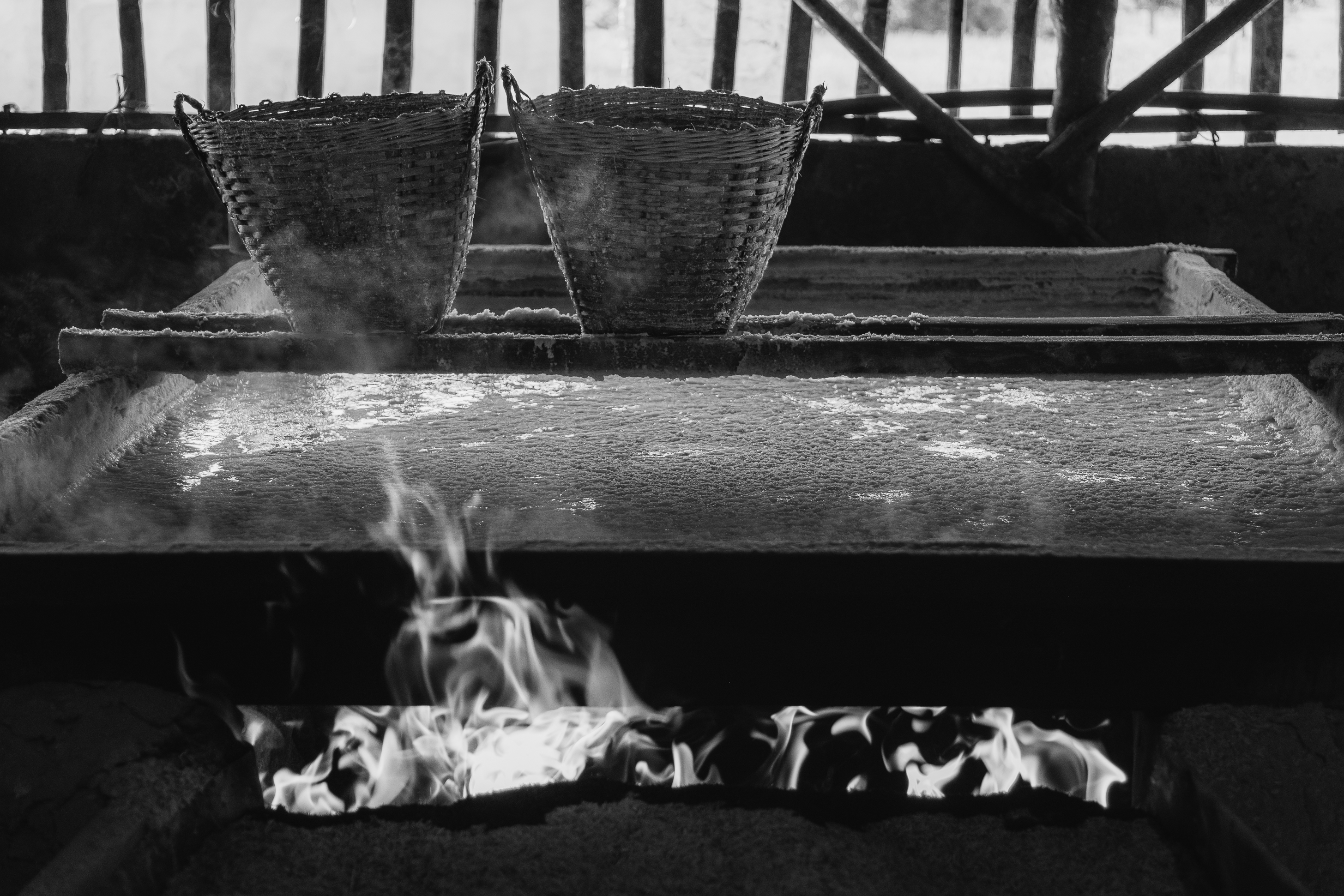
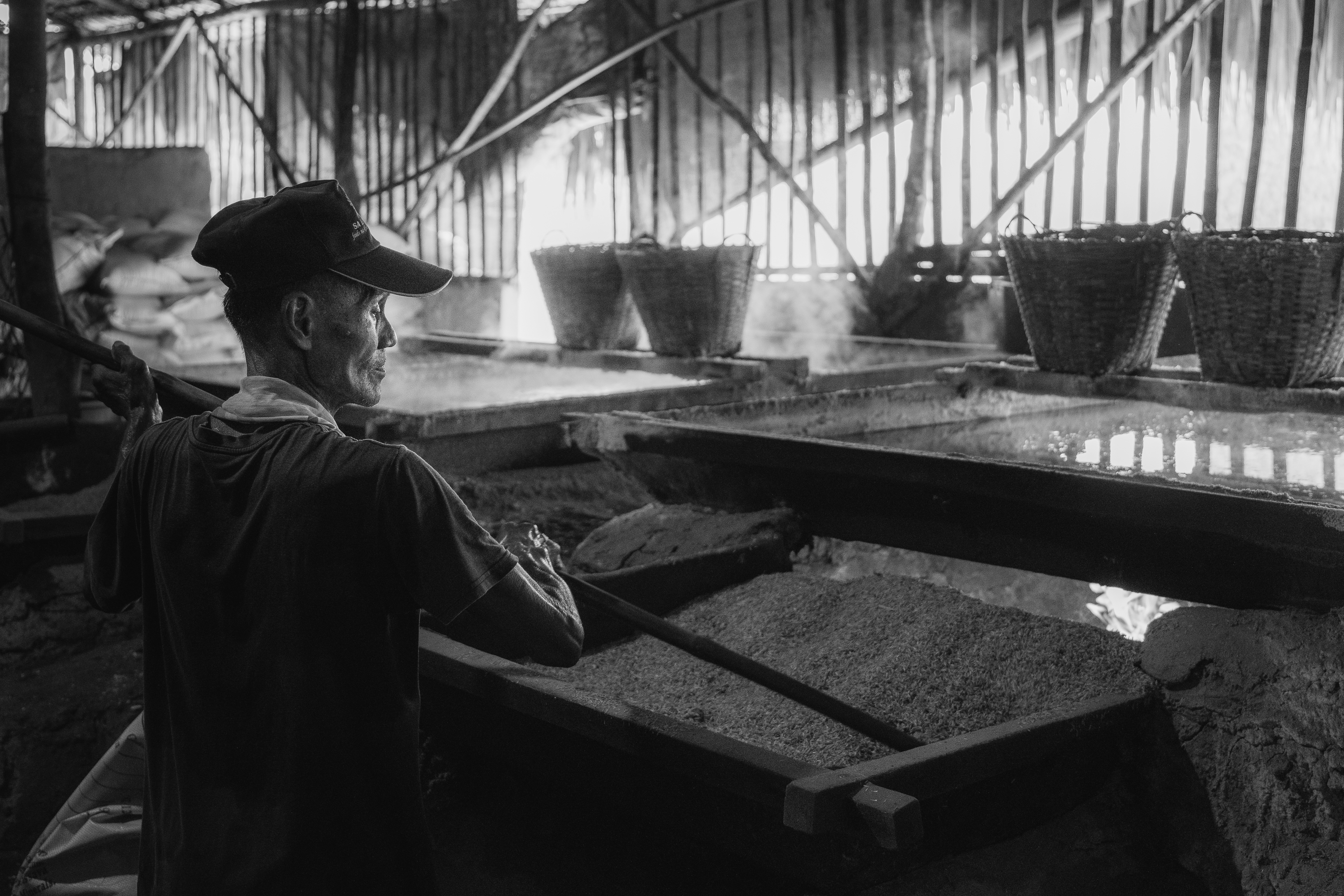
With the empty baskets placed on top of the bins, I was ready to observe the next steps of the process. I expected Mang Boy to begin mixing the seawater as it boiled, but the bins were left undisturbed. Instead, he moved from one fire pit to another, feeding the flames with rice husks. As I watched him open bag after bag, repeatedly tend to the fires, and move between the pits, I began to understand where much of the work actually went. He told me that around 60 bags of rice husks were used in a single cycle. The sheer quantity, the frequency with which he fed the fires, and the way he moved from one pit to another made me realize that keeping the fires going was not an occasional task, but a continuous part of the process.
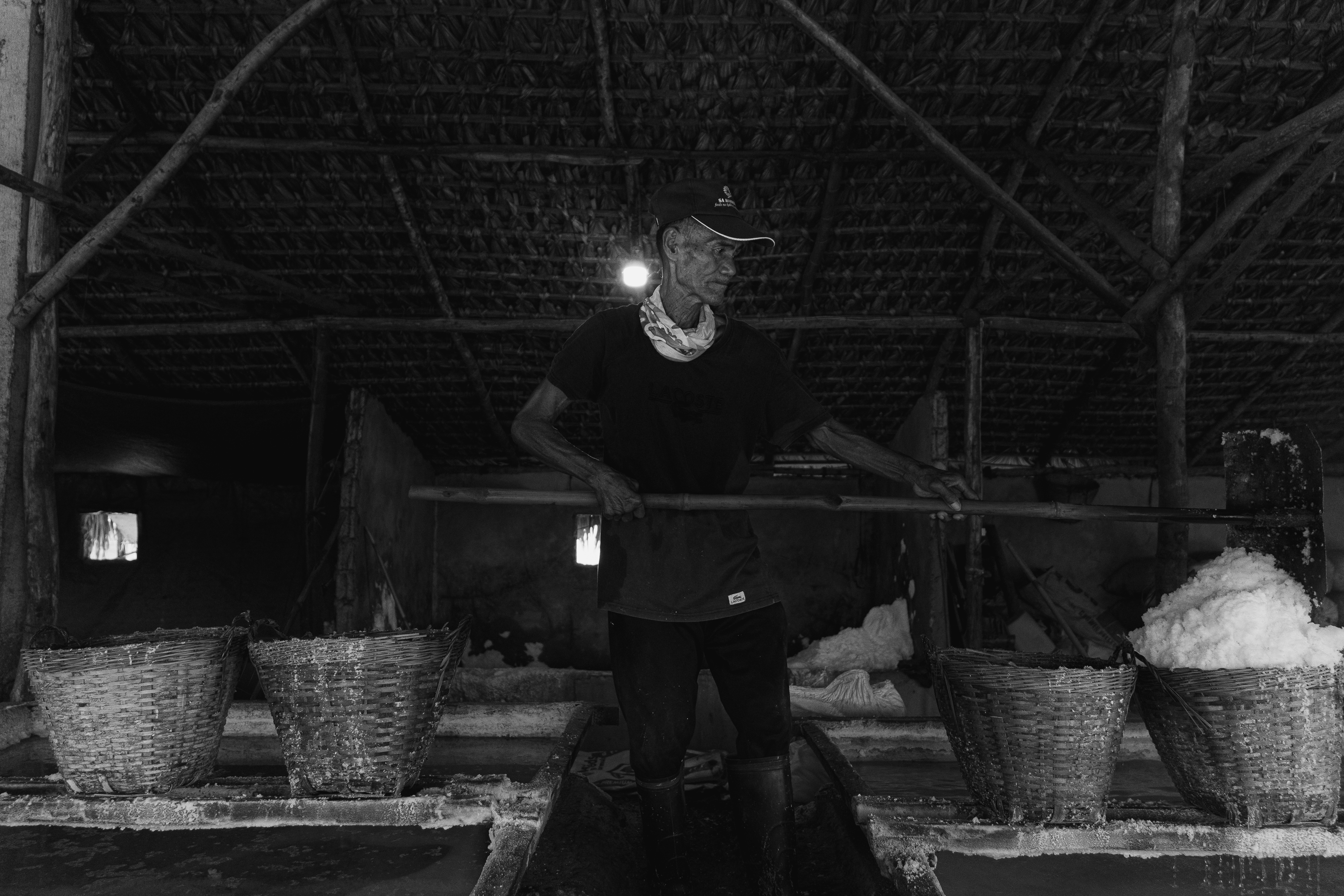
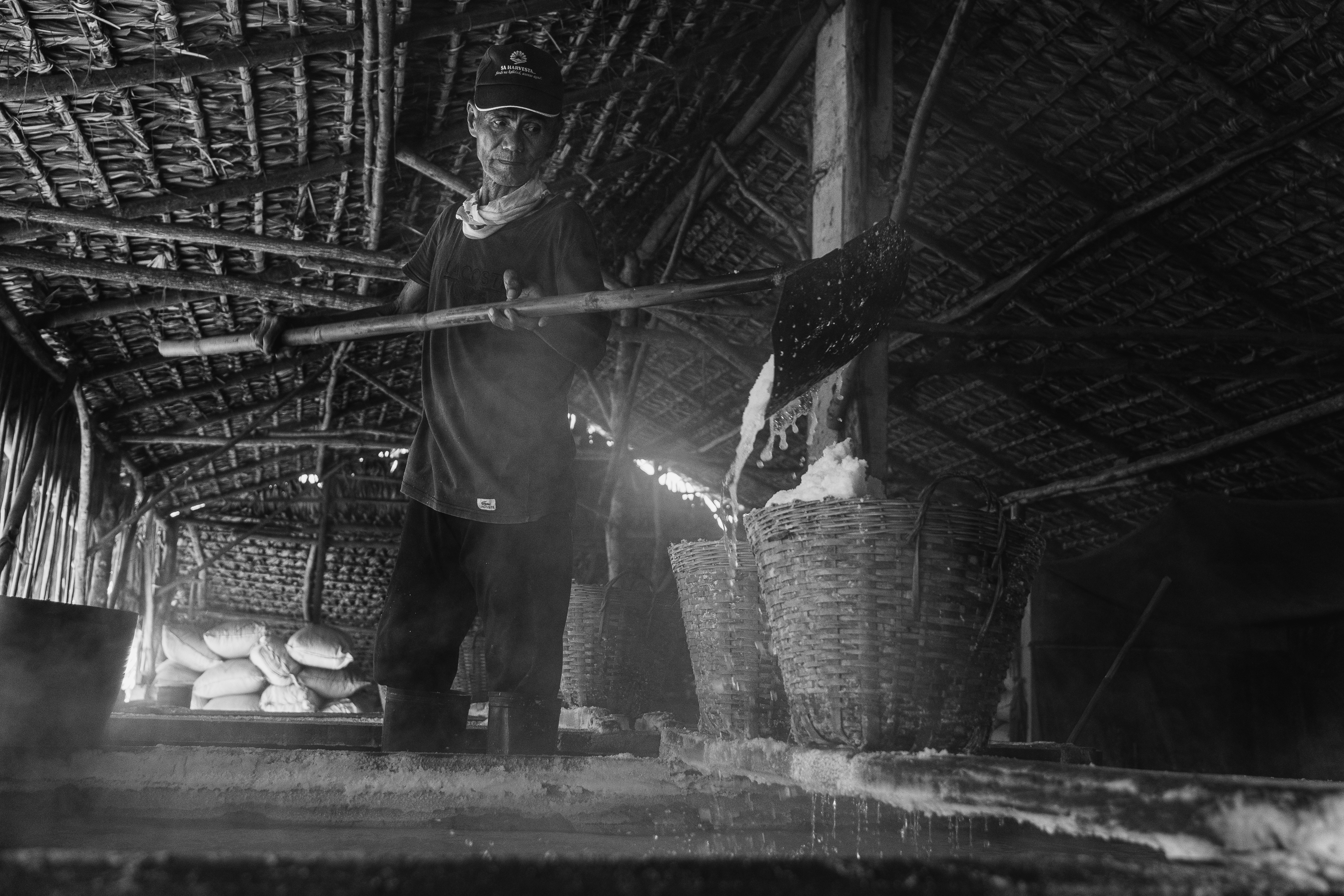
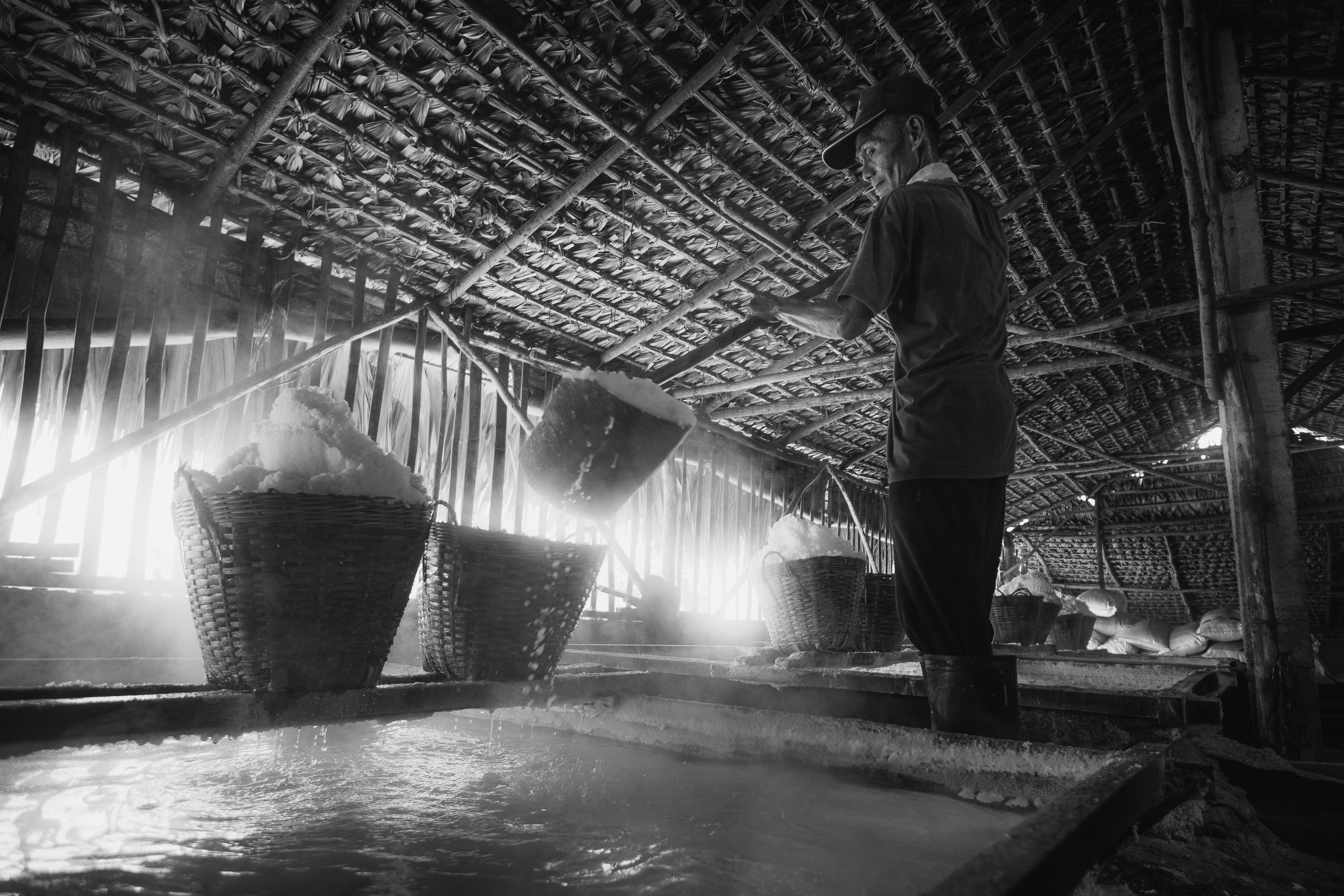
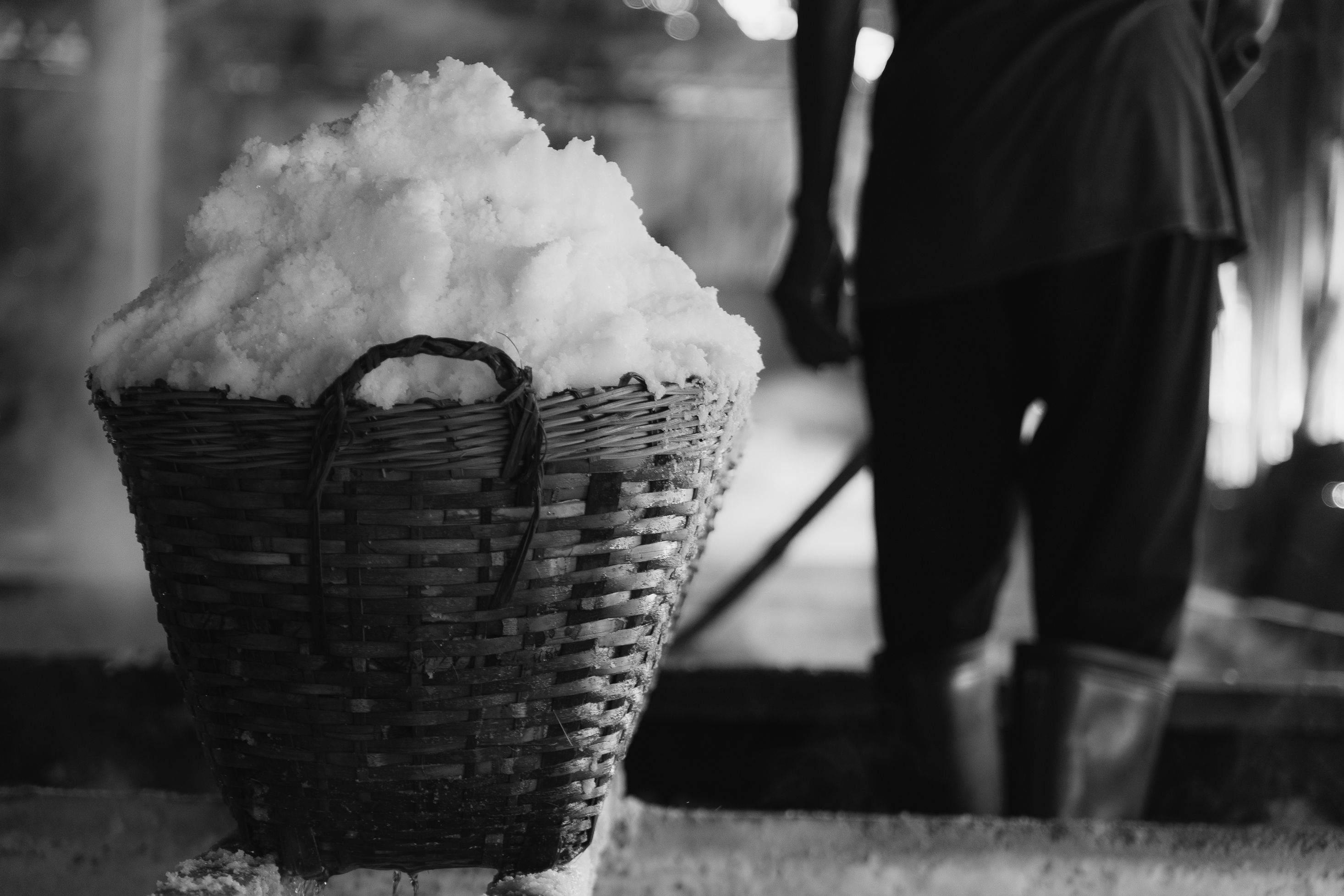
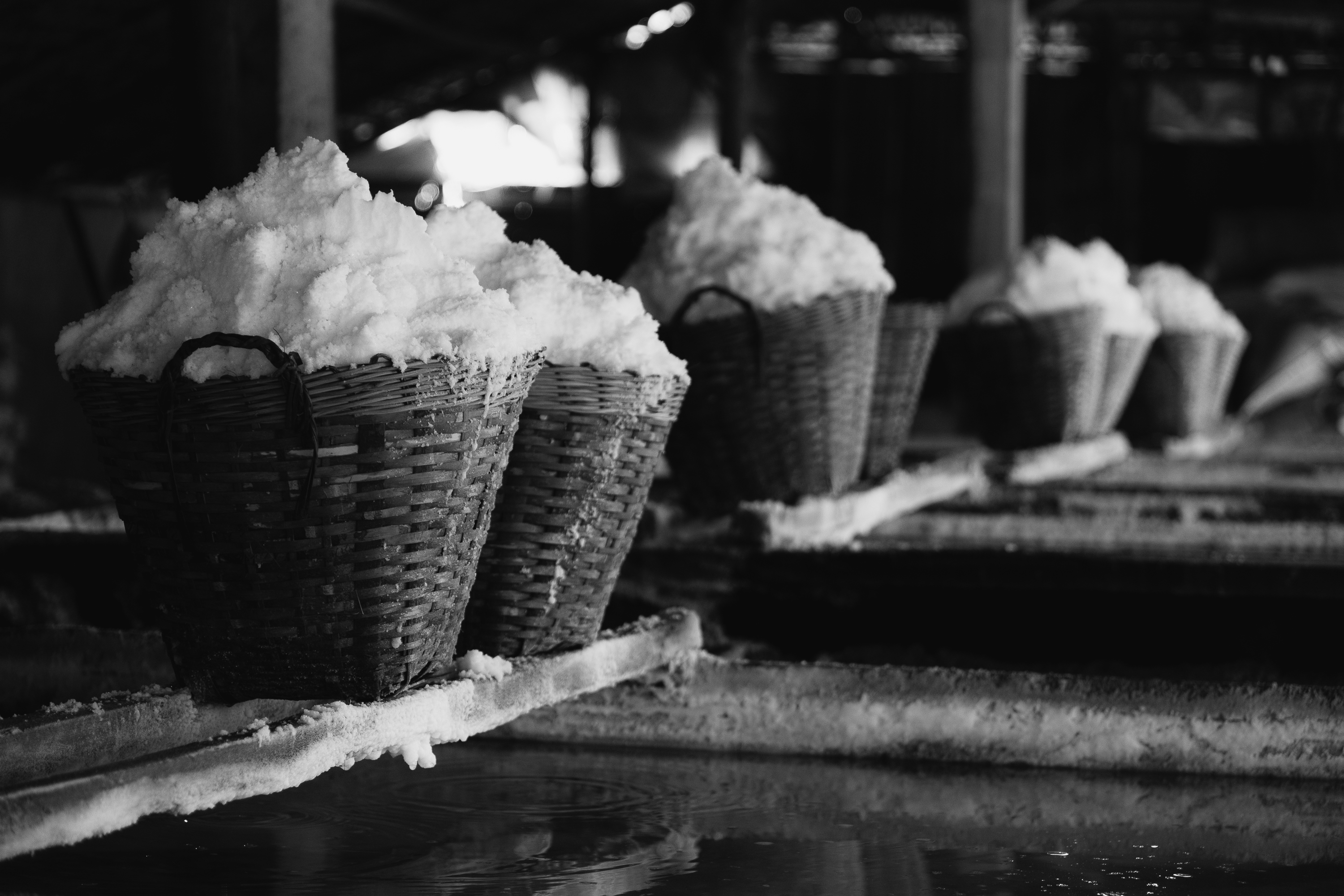
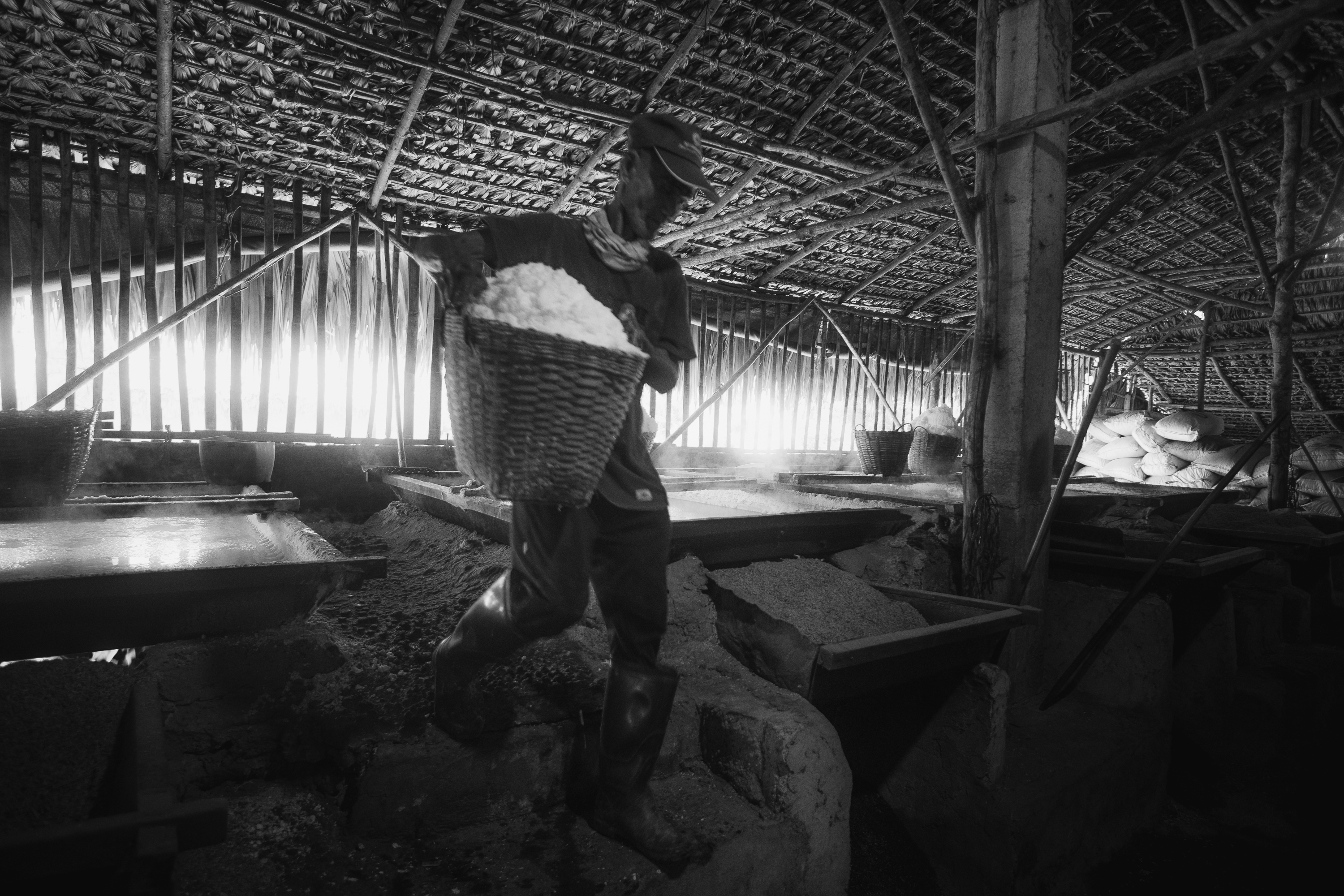
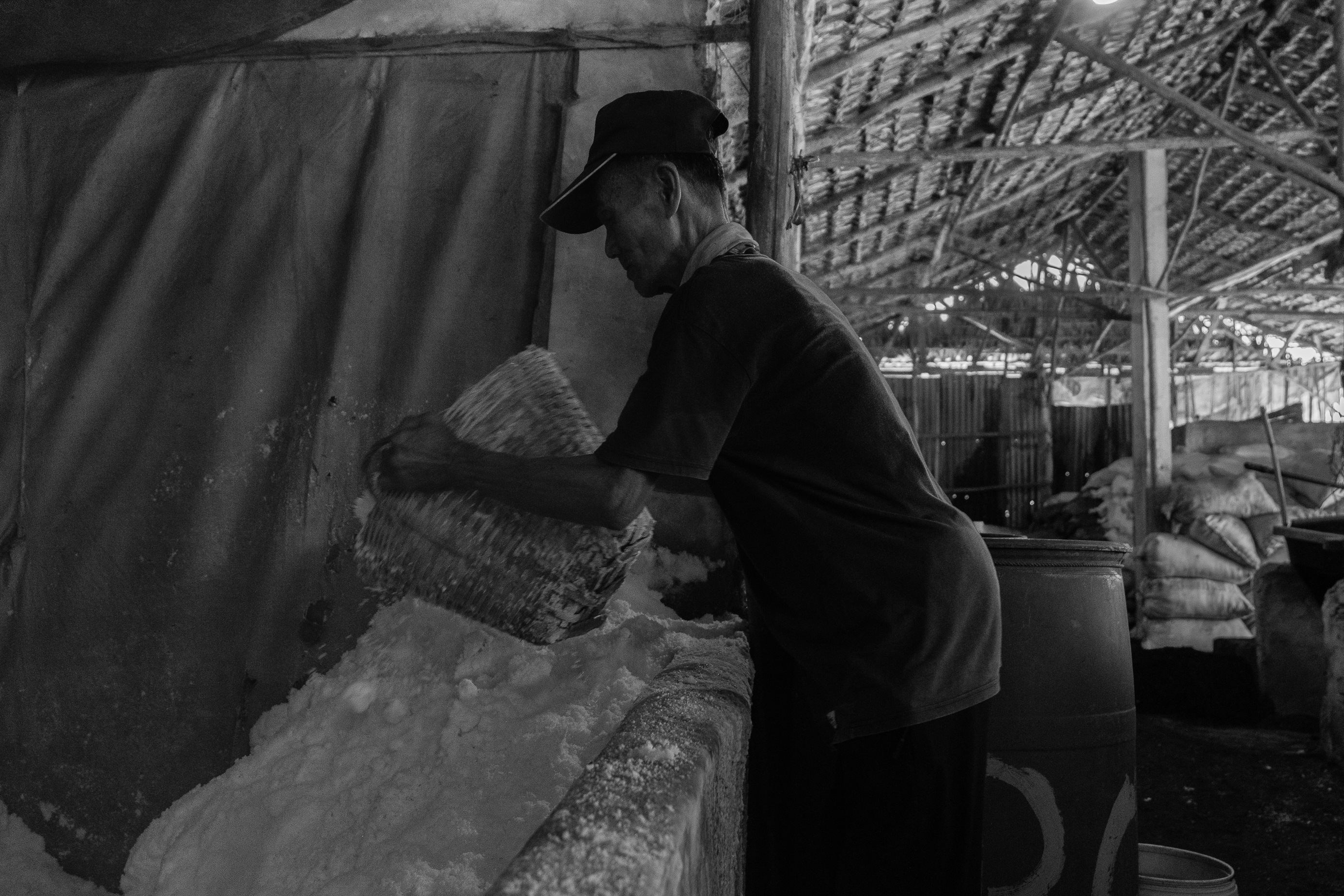
When it was time to collect the salt, Mang Boy began scooping the hardened crystals from the bins and transferring them into woven baskets. Each scoop seemed moderate, but as he continued, the baskets gradually filled with heaps of white salt. It was interesting to see how much salt a single bin could yield, as well as the bright white crystals against the dark, weathered baskets. What had been seawater in the bins had now become a harvest of salt, ready for the next stage of the process.
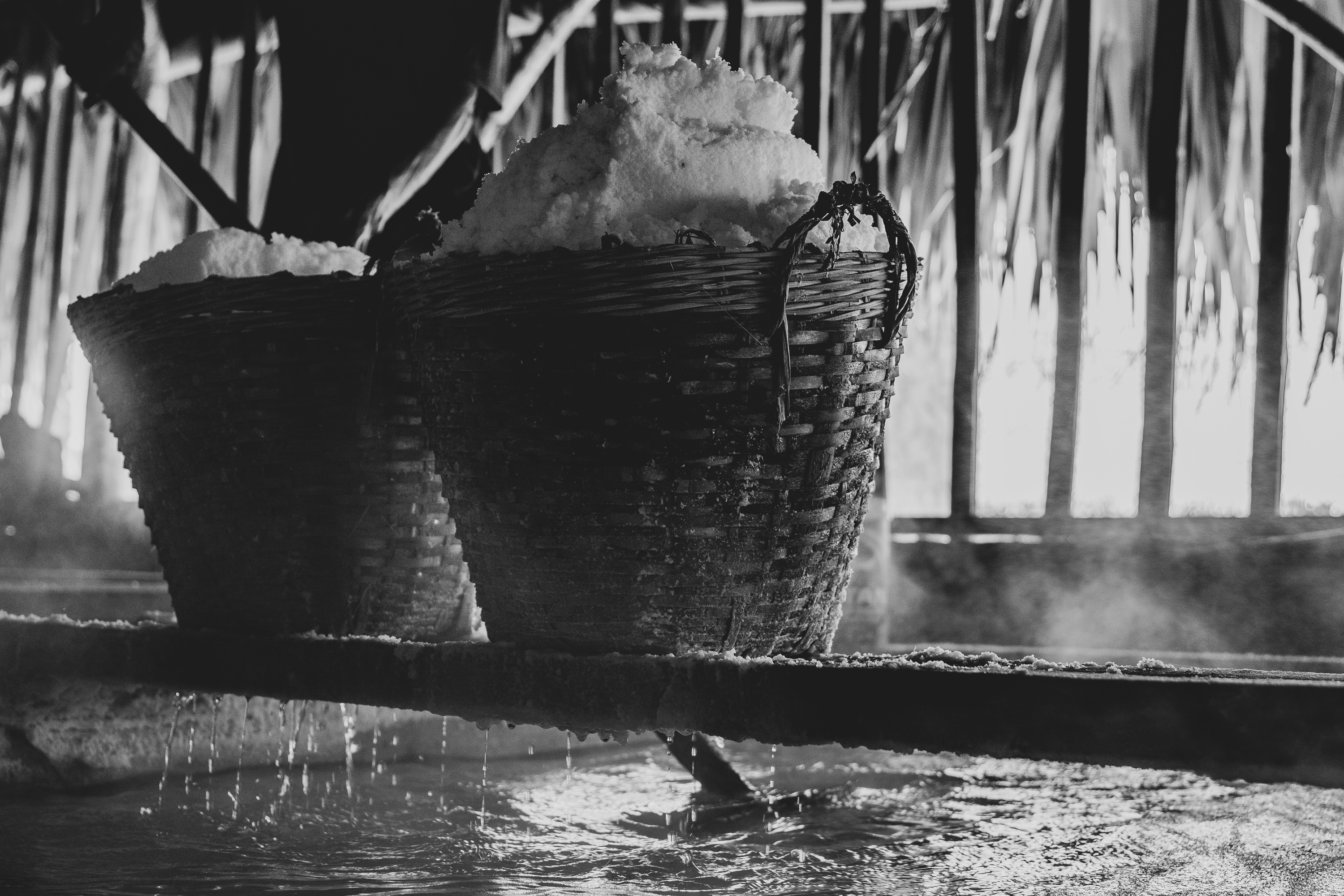
Once the baskets were filled, the salt was left to settle and drain, with water dripping back into the bins below. I found the sight pleasant to observe, especially as the droplets fell from the woven baskets. I thought the water might be collected for reuse, while allowing the salt to drain could also help shorten the final drying process before packing. Meanwhile, the fires continued to burn as more rice husks were fed into them, keeping the process going.
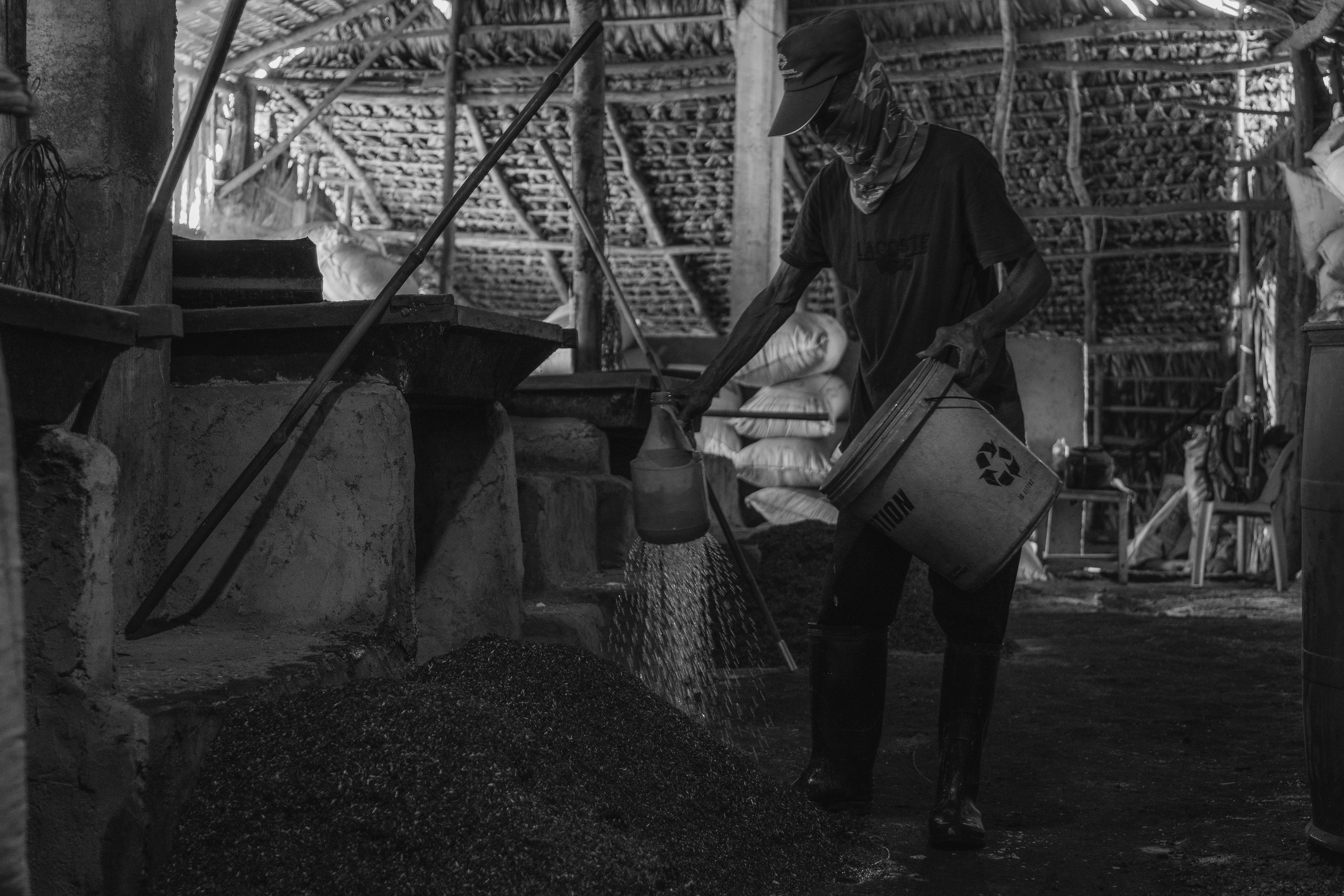
After draining, the salt was transferred from the baskets into a larger collection area. Mang Boy then turned his attention to the used rice husks, sprinkling water over them. I assumed this was to make sure no embers remained and to prevent the husks from catching fire again. With the salt collected and the used fuel dealt with, the cycle of boiling and gathering came to an end.